Applications
Specific concrete failures, and what the repair actually takes.
Spalled Control Joints in Distribution Centers
This is the highest-volume repair in the category. A DC with a few miles of sawcut joint and around-the-clock forklift traffic will lose joint edges continuously, and every spalled joint gets worse faster than the last one because the wheel is now landing instead of rolling.
The operational cost is not the concrete. It is the wheel and bearing wear on the fleet, the product damage from jolted loads, and eventually the driver complaints that turn into a safety conversation.
Because Concrete Mender cures fast and grinds flush, joints can be repaired aisle by aisle on off shifts without taking the building down.
Spec: saw or chip the joint to sound concrete, vacuum clean, Concrete Mender into the defect, grind flush after cure. Coat with OR-621 / OR-55 where the surrounding floor is coated.
Loading Docks, Ramps & Dock Edges
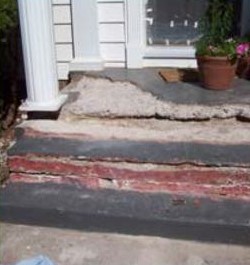
Dock edges take the worst combination in concrete: point impact from trailer landing gear and dock plates, freeze-thaw cycling because they are half outdoors, and de-icing salt tracked in every winter.
The failure pattern is predictable — the nose of the dock ravels, then the edge breaks back, then the leveler no longer seats and the whole dock position comes out of service.
Rebuilding the edge structurally and then coating it with a chemically resistant, salt-tolerant membrane resets the clock on that cycle rather than deferring it another season.
Spec: Concrete Mender into the raveled edge and back into sound concrete, grind and reform the nose, 7001 Primer, then OR-621 basecoat and OR-55 topcoat with a non-slip broadcast on the drive surface.
Cold Storage & Freezer Slabs
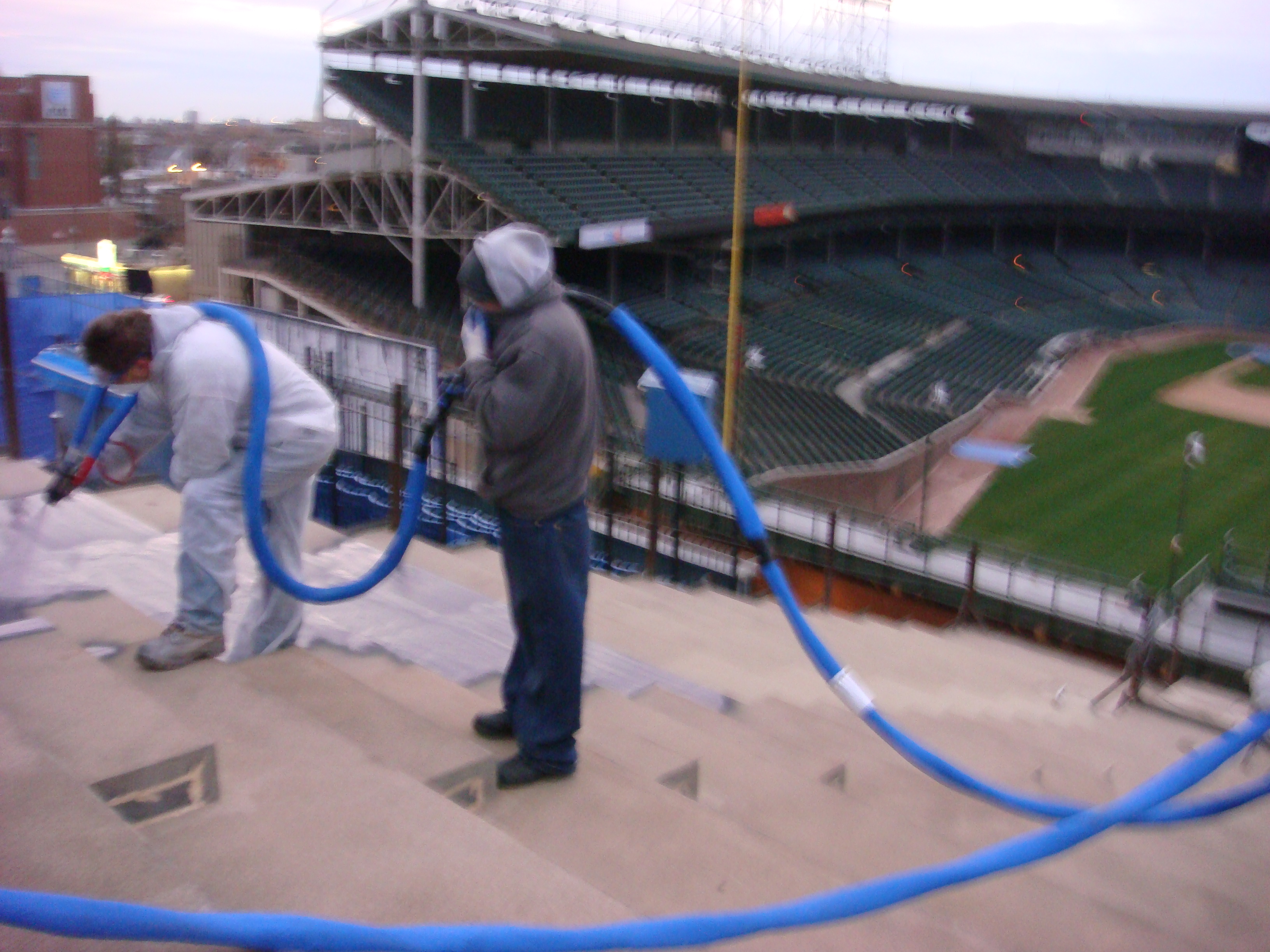
Freezer floors punish concrete in a way ambient floors do not. Constant sub-freezing service, moisture migration, thermal cycling at the door transitions, and a coating window that is measured in hours because you cannot leave the room warm.
Repairs in these rooms have to cure cold and cure fast. They also have to survive the thermal movement between the frozen slab and the ambient dock outside it, which is where most freezer floor repairs actually fail — at the transition, not in the middle of the room.
Talk to us before specifying a cold-service repair. Ambient and substrate temperature change the working window substantially and we would rather set expectations up front than get a call from a room at −10°F.
Spec: Concrete Mender on joints and spalls with cold-service working times confirmed for your conditions; coating system selected for the operating temperature range and applied within the room's available window.
Plant, Shop & Truck Bay Floors
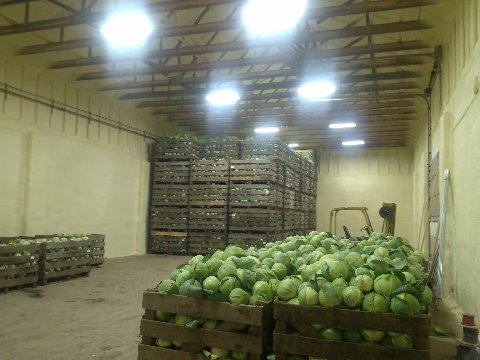
Manufacturing and maintenance floors bring a different problem: contamination. Twenty years of hydraulic fluid, cutting oil, and coolant does not sit on the surface — it wicks into the concrete, and grinding just exposes more of it.
Any coating applied over oil-saturated concrete will fail, and it will fail in a way that looks exactly like a product defect. The fix is chemical cleaning with Super Orange Cleaner, then mechanical prep, then a moisture and contamination check before a drop of coating goes down.
Once the slab is clean and repaired, the finished system handles the chemical exposure, the wheel traffic, and the wash-down these floors get.
Spec: Super Orange Cleaner degrease · Concrete Mender on cracks and popouts · shot blast to CSP 4–5 · 7001 Primer over stained areas · OR-621 basecoat · OR-55 topcoat with non-slip broadcast in wet zones.
Containment, Trenches & Below Grade
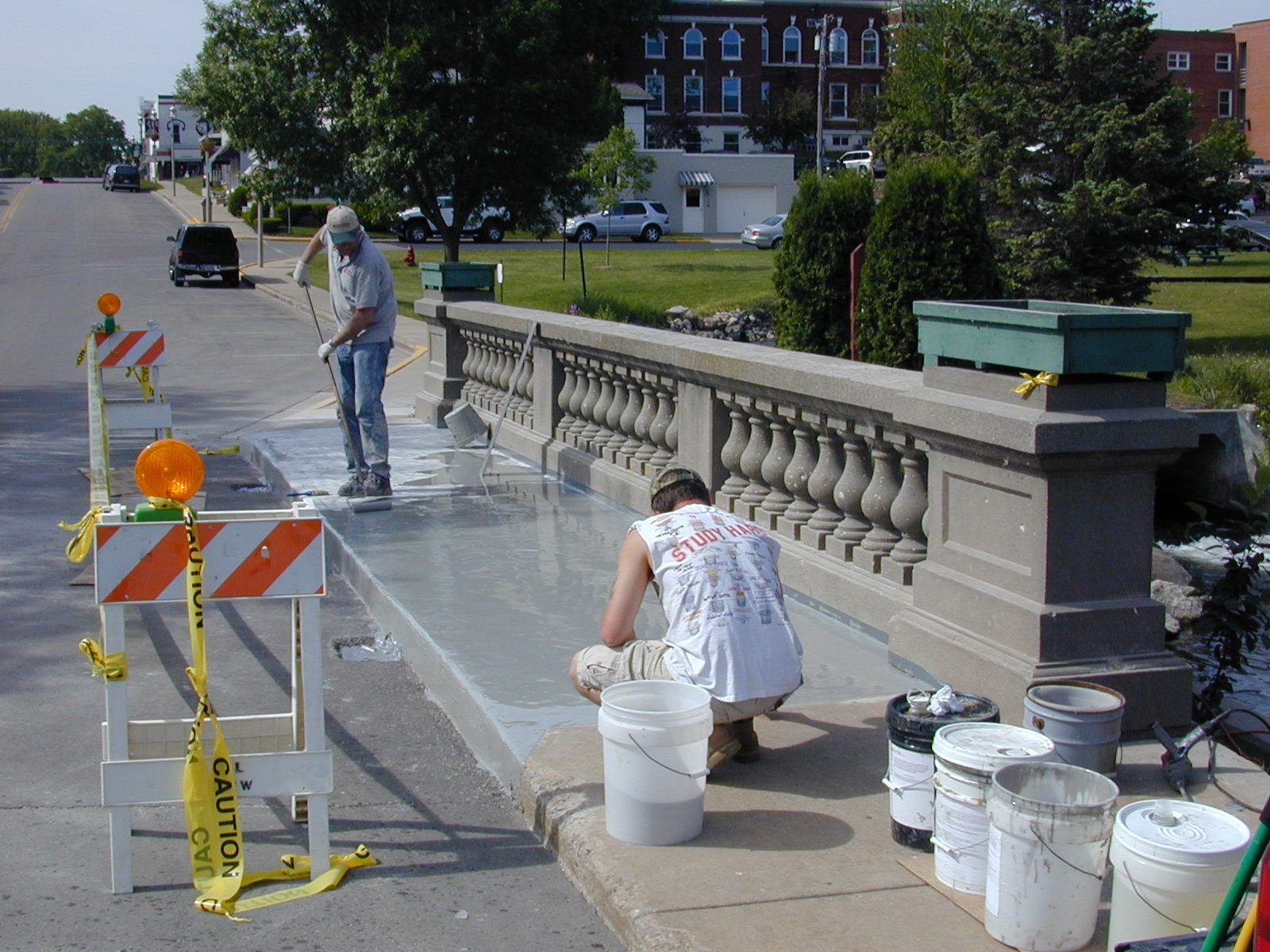
Where concrete is holding something back — a chemical, a water table, a product spill — joints are the enemy. Every joint is a place the containment is only as good as a sealant somebody installed years ago.
Polyurea gives a monolithic lining across the floor, up the walls, and around every penetration with no joints at all. On below-grade walls the argument is even simpler: you get exactly one chance to waterproof a surface that will be buried under twelve feet of backfill.
Spec: Concrete Mender on defects · 7001 Primer over cured concrete · OR7K at 60–80 mil DFT for containment and water-contact surfaces · Badger Black at 40–60 mil DFT below grade, carried up to the grade line.
Also Commonly Repaired & Coated
- Warehouse aisles and staging areas — joint repair plus a coated wear surface
- Food and beverage plant floors — seamless, wash-down resistant, no seams to harbor bacteria
- Parking decks and aprons — freeze-thaw and de-icing salt exposure
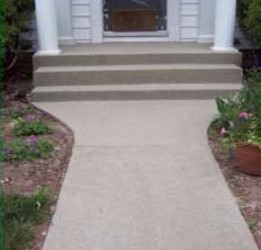
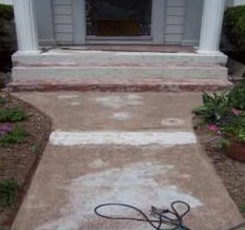
- Concrete steps, landings, and ramps — rebuilt noses with non-slip finish
- Trench drains and pit walls — monolithic lining with no joints
- Equipment pads and machine bases — impact and vibration damage
- Grain and produce storage floors — agricultural chemical exposure
- Foundation walls and retaining structures — Badger Black below grade
- Barn and livestock building slabs — manure acid and constant wash-down
Describe the Failure, Get the Sequence
Photos help. Tell us what the slab is doing, what it does for a living, and how much of it there is.
Ask a TechnicianGet Concrete Repair Pricing
Tell us about your project and we will follow up with product details, technical data sheets, and pricing.